Estimating Monetary and Nonmonetary Benefits of Salt Marshes in Southeast New England
Project Brief
The Challenge
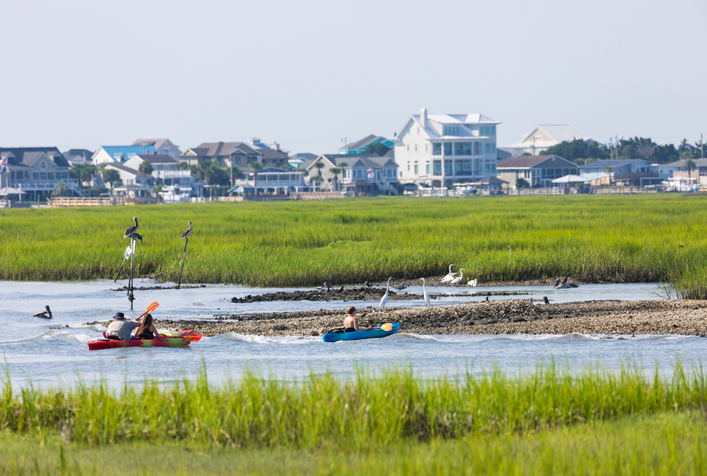
Salt marshes are highly productive ecosystems that provide many valuable resources and ecosystem services to coastal communities, including flood mitigation, opportunities for ecotourism, carbon sequestration, and more. However, salt marsh habitats, and the benefits they provide, are threatened by sea-level rise and the increasing intensity and frequency of coastal storms.
ERG's Solution
ERG supported the U.S. Environmental Protection Agency’s (EPA’s) Region 1 in assessing the monetary and non‑monetary benefits provided by salt marshes across the Southeast New England Program (SNEP) region. As part of this work, ERG identified marshes of particular interest based on their value for wildlife habitat, recreational opportunities, and flood‑prevention services. Using the National Oceanographic and Atmospheric Administration’s Sea Level Affecting Marshes Model (SLAMM), ERG simulated flooding scenarios for three SNEP marshes with and without the marshes present, incorporating projected sea‑level rise and storm surge conditions. ERG then evaluated the extent and economic impacts of projected flooding on nearby roads and residences under both scenarios. Our analysis demonstrated that these marshes offer substantial natural infrastructure benefits by reducing flooding and mitigating the costs associated with sea-level rise. The results of this assessment will help local policymakers make more informed land-use decisions and prioritize funding for coastal resilience projects.
Client
U.S. Environmental Protection Agency