Evaluating a Potential Statewide Recycling Refund Program in Washington State
Project Brief
The Challenge
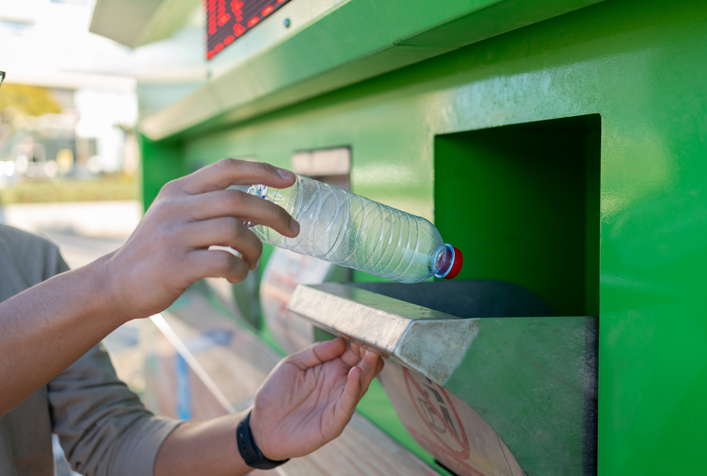
As states look for new ways to improve recycling and reduce litter, many are considering recycling refund programs (also known as beverage container deposit return systems). Under these programs, consumers pay a small refundable deposit when purchasing eligible beverages and receive the deposit back when they return their empty containers for recycling. These programs have proven effective at increasing recycling rates and producing cleaner recyclable materials. Under Washington's 2025 Recycling Reform Act, the Washington State Department of Ecology (Ecology) selected ERG to evaluate what a statewide recycling refund program could look like and how it could best serve residents across Washington. The study explored how to create a system that is convenient, equitable, and accessible for people living in urban, suburban, rural, remote, and Tribal communities while providing state leaders with the information needed to evaluate future policy options.
ERG's Solution
ERG led a two-phase study that combined technical analysis with extensive community engagement to understand both how a recycling refund program could work and what would make it successful for Washington communities:
- In Phase I, ERG developed a mapping and modeling approach to evaluate different options for locating beverage container return sites across the state. The ERG project team analyzed travel times, community characteristics, and different types of redemption locations to understand how various system designs would affect convenience and access for residents.
- In Phase II, ERG engaged people across Washington to understand what matters most when designing a recycling refund program. Through statewide surveys, interviews, Tribal engagement, partnerships with community-based organizations, and a public comment period, the ERG team gathered perspectives from residents, local governments, retailers, recycling operators, producers, and other key stakeholders.
By combining technical analysis with real-world community input, ERG helped Ecology evaluate practical options for designing a recycling refund program that reflects the needs of communities across Washington. The study provides a strong foundation for future policy decisions and demonstrates ERG's ability to help states evaluate, design, and implement innovative recycling programs.
Client
Washington State Department of Ecology