Vermont Energy Sector Life Cycle Assessment
Project Brief
The Challenge
In 2020, the Vermont Legislature passed the Vermont Global Warming Solutions Act, which set legally binding emission reduction requirements for 2020 to 2050. To benchmark progress toward meeting these requirements, the Vermont Agency of Natural Resources (ANR) uses the Vermont Greenhouse Gas Emissions Inventory (VT GHG EI). The VT GHG EI is an in-boundary, sector-based analysis that characterizes emissions associated with the use phase of energy commodities consumed within Vermont (e.g., fuel combusted in vehicles or at facilities) and emissions associated with upstream activities (e.g., raw material extraction, processing, transportation, etc.) to the extent they occur within the state. However, the VT GHG EI does not include upstream emissions related to fuel extraction, processing and distribution that occur outside state borders, and it also doesn’t include upstream emissions from extraction and processing of fuel consumed for electricity generation. To account for the VT energy sector’s full GHG impacts, ANR needed a way to assess all emissions, regardless of where they occur.
ERG's Solution
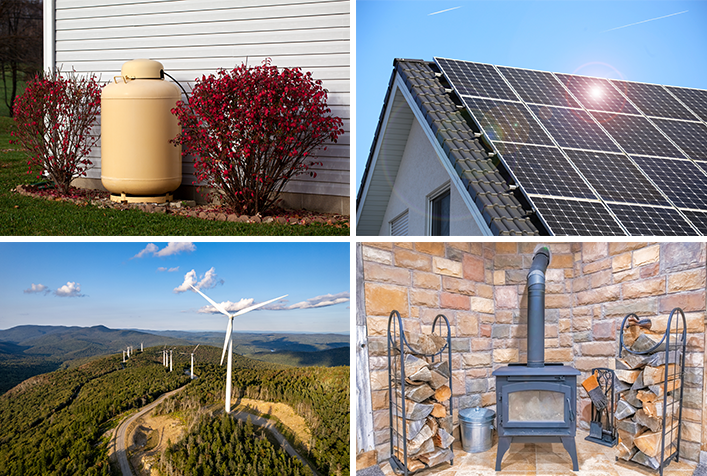
To help ANR achieve this goal, ERG conducted an energy sector life cycle assessment (LCA). We started by identifying energy pathways used in Vermont and determining LCA data, methods, and tools to best characterize each energy pathway’s upstream emissions. Then we calculated upstream emission factors for each energy pathway and total upstream energy pathway emissions based on VT GHG EI activity data. As the final step, we combined total upstream energy pathway emissions with the existing in-state VT GHG EI. Using this method, our team assessed life cycle impacts for all energy pathways relevant to Vermont, including biofuels, fossil-fuels, hydropower, nuclear, solar photovoltaic, wind, wood, and renewable natural gas from waste sources. The resulting report, the Vermont Energy Sector Life Cycle Assessment, is publicly available. We also developed a series of tools that Vermont can use to update its energy sector LCA each year to better understand progress towards its emission reduction goals.
Client
Vermont Agency of Natural Resources